
Retaining Walls That Last: A Guide to Hardscape and Stone Installation
Retaining walls turn slopes into usable space. Compare block, natural stone, and boulder walls, and learn the drainage and base details that keep walls standing.
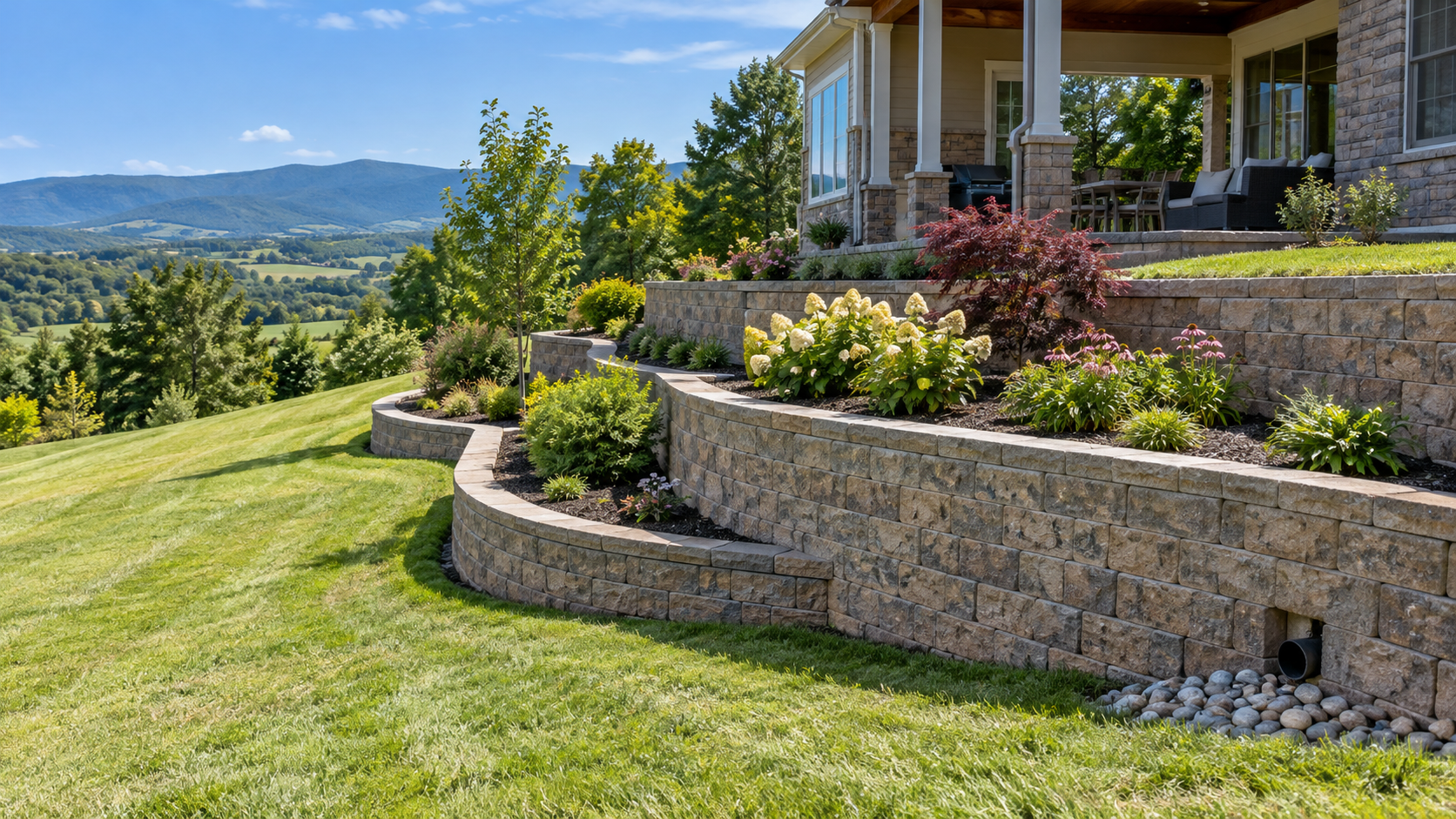
A slope can be the most frustrating part of a yard. Grass won't stay put. Mulch washes down after every storm. Mowing feels risky. And that steep bank by the driveway never quite looks finished.
A well-built retaining wall changes all of that. It holds back soil, creates level space you can actually use, and adds structure and character to the landscape. But retaining walls are also one of the most technically demanding hardscape projects. Built right, they last for decades. Built wrong, they bulge, lean, and eventually fail. Here's what to know about retaining wall installation and stone choices.
What a Retaining Wall Does
A retaining wall holds back soil that would otherwise slide or erode downhill. Common reasons to build one include:
- Creating a flat area for a patio, lawn, or garden on a sloped lot
- Stopping erosion on a steep bank
- Terracing a hillside into planting beds
- Supporting a driveway, walkway, or parking area cut into a slope
- Adding raised beds or seating walls for design interest
For smaller slopes, plants and ground covers may be enough. Our post on erosion control for sloped yards covers those options.
Choosing the Right Material
Segmental retaining wall block
Manufactured concrete blocks are designed specifically for retaining walls. Many systems interlock or use a lip so each row sets back slightly from the one below, helping the wall lean into the hill.
Pros: Engineered for strength, consistent sizes, wide range of colors and textures, cost-effective for larger walls.
Cons: A more uniform, manufactured look than natural stone.
Natural stone
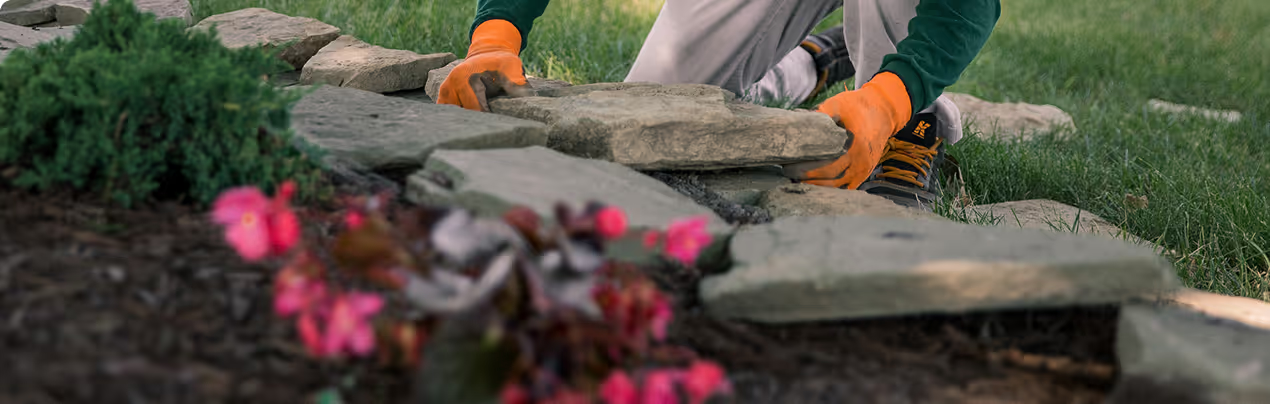
Natural stone walls can be dry-stacked, with stones fitted together without mortar, or built with large boulders.
Pros: Timeless look, blends naturally into the landscape, pairs well with rural properties and gardens.
Cons: More labor-intensive, higher cost, and best suited to lower walls unless carefully engineered.
Boulder walls
Large boulders stacked into place create a rugged, natural wall that suits mountain and country settings.
Pros: Very natural appearance, strong presence, can handle significant loads.
Cons: Requires heavy equipment and access for machinery.
Timber
Treated timber walls are sometimes used for low, simple walls. They're less expensive up front, but wood eventually rots, so they don't last as long as stone or block.
What Makes a Retaining Wall Last
A solid base
The first row of block or stone sits on a compacted gravel base set below grade. If that base isn't level and firm, every row above it will be off.
Drainage behind the wall
Water is the number one cause of retaining wall failure. When soil behind a wall gets saturated, it pushes harder against the wall. A properly built wall includes clean gravel backfill behind the wall and, in many cases, a perforated drain pipe at the base to carry water away. In the Shenandoah Valley, with heavy spring rains and clay soils, drainage is essential.
Setback or batter
Walls should lean slightly back into the hill. This setback helps resist the pressure of the soil behind them.
Reinforcement for taller walls
Taller walls often need geogrid, a reinforcing fabric layered into the soil behind the wall that ties the wall and soil together. Walls supporting heavy loads, like driveways, or walls above a certain height may need an engineered design. Check with your local building office about permit requirements before starting a tall wall.
Signs a Wall Is Failing
- Bulging or bowing in the face of the wall
- Leaning forward
- Cracks or shifting blocks
- Soil washing out through gaps
- Water pooling behind or at the base of the wall
Failing walls usually point to drainage or base problems. Repairs often mean rebuilding sections correctly.
Combining Walls With Other Hardscape
Retaining walls often work together with other features: steps that climb a slope, a patio on a newly leveled area, seating walls around a fire pit, or stone borders around planting beds. Planning these elements together creates a cohesive design.
Planting Around a Retaining Wall
Plants soften the look of a wall and help control erosion above and below it. Cascading plants at the top, low shrubs along the base, and deer-resistant perennials in terraced beds all work well. See our list of deer-resistant plants for ideas.
DIY or Professional?
A short garden border of a foot or two can be a manageable DIY project. Anything taller, anything holding back a significant slope, or any wall near a driveway or structure should be built by a professional. Mistakes in the base or drainage are hard to fix without starting over.
Common Questions
How long does a retaining wall last?
A well-built block or stone wall with proper drainage can last for decades. Timber walls have a much shorter lifespan because wood eventually rots.
Can I build a patio on top of a retaining wall area?
Yes, terracing a slope with a wall often creates the perfect level space for a patio or lawn. The wall and backfill just need to be designed and compacted to support the added load.
Do retaining walls need maintenance?
Very little. Keep drain outlets clear, watch for soil washing out at the base, and make sure downspouts aren't dumping water directly behind the wall.
Hardscape and Stone Installation From Virginia Landscape Company
Virginia Landscape Company builds retaining walls, patios, walkways, and other stone features for homes and businesses in Harrisonburg, Dayton, Penn Laird, Bridgewater, and McGaheysville. Learn more about our hardscape services and mulch and stone work.
Contact us or call 540-208-9603 to talk about your slope.

Ready to reimagine your landscape?
Contact Us
We’re ready to bring your landscape vision to life. Reach out and start your outdoor transformation today.


