
Lawn Care Programs in Harrisonburg: Why Your Soil Test Comes First
Great lawns start with the soil. Learn how soil testing, fall fertilization, and targeted weed control come together in a custom lawn care program for Harrisonburg.
Walk down the fertilizer aisle at any home improvement store and you'll see bags promising thicker, greener grass. Most of them are formulated for lawns across the whole country. Your lawn, though, isn't growing across the whole country. It's growing in Shenandoah Valley clay, in a transition-zone climate, with its own soil chemistry.
That's why the best lawn care programs start with your soil, not with a bag. Here's how a custom lawn care program works in Harrisonburg, why soil testing matters, and how fertilization and weed control fit together through the year.
Start With a Soil Test
A soil test tells you what your lawn actually needs. It measures:
- pH: How acidic or alkaline the soil is. Tall fescue grows best in slightly acidic to neutral soil. If pH is off, grass can't use nutrients efficiently, even if they're present.
- Phosphorus and potassium: Key nutrients for root growth and stress tolerance.
- Other nutrients and organic matter, depending on the test.
Without a test, fertilizing is guesswork. You might add nutrients your soil already has plenty of, while missing what it lacks. Too much phosphorus can also run off into streams and contribute to water quality problems.
Soil tests are inexpensive, and Virginia Cooperative Extension offices provide information on submitting samples. Testing every few years is enough for most lawns. Our turf services include soil testing and analysis so your program is built on real data.
How to Take a Good Soil Sample
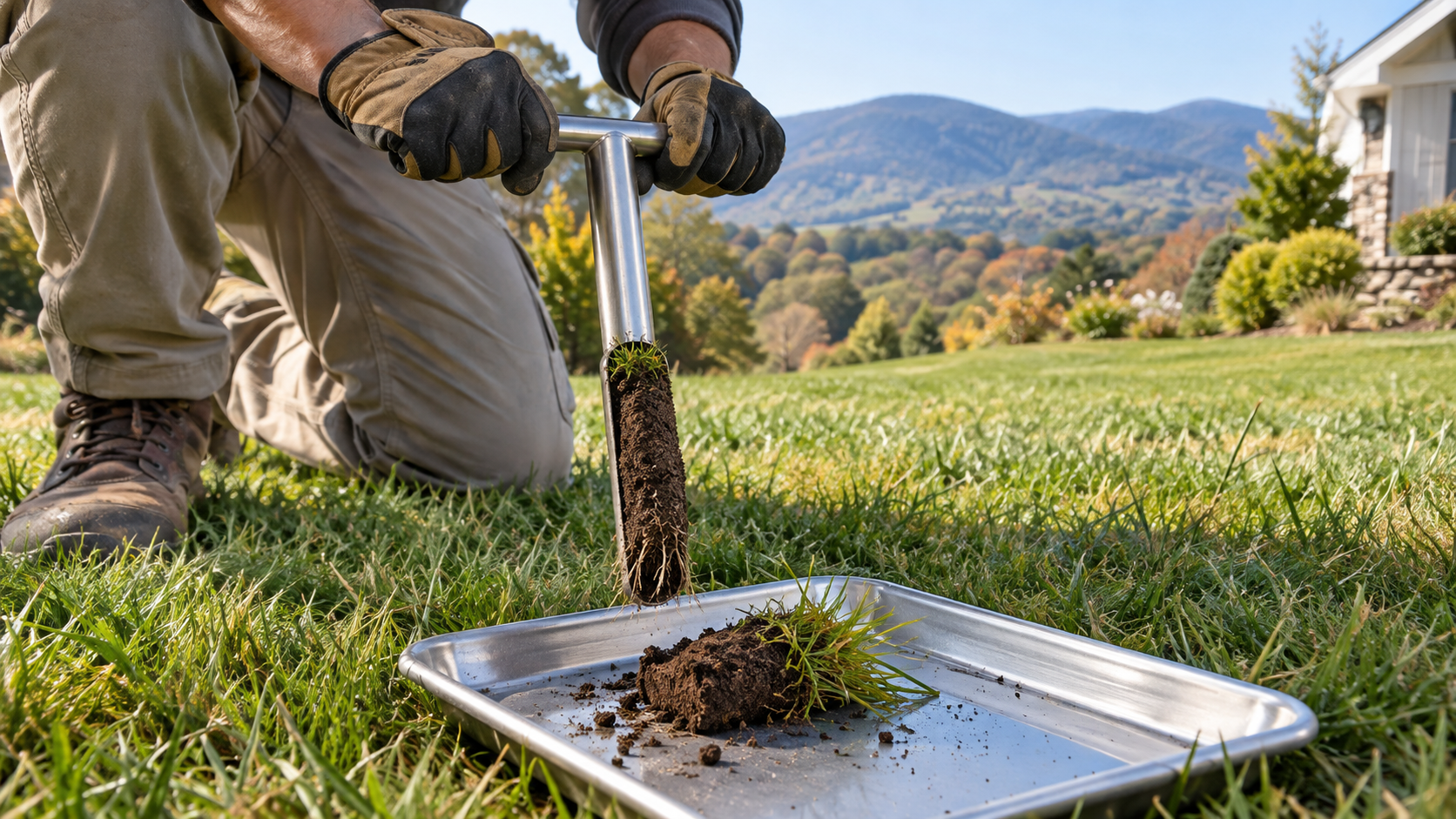
- Use a clean trowel or soil probe.
- Take 10 to 15 small samples from across the lawn, about 3 to 4 inches deep.
- Skip unusual spots like where a woodpile sat or near the driveway edge.
- Mix the samples in a clean bucket.
- Send about a cup of the mixed soil for testing.
Sample separate areas, like the front lawn and backyard, if they're treated differently or look very different.
Fertilizing Cool-Season Grass the Right Way
Most lawns around Harrisonburg are tall fescue, a cool-season grass. Cool-season grasses grow most actively in spring and fall, and they slow down during summer heat. That shapes when fertilizer does the most good.
- Fall is the most important season. Fertilizing in September through November feeds root growth and helps the lawn recover from summer stress.
- Spring feeding should be light. Too much nitrogen in spring pushes fast top growth, more mowing, and weaker roots heading into summer.
- Avoid heavy summer fertilizing. Pushing growth during heat and drought stresses the grass and can encourage disease.
Slow-release nitrogen sources feed the lawn gradually and reduce the risk of burning or runoff.
Weed Control That Works
Preventive control
Pre-emergent herbicides stop many annual weeds, like crabgrass, before they sprout. Timing is critical. Applied too early, they wear off before weeds germinate. Applied too late, weeds are already up.
Spot treatment
Broadleaf weeds like dandelions, clover, and plantain are best treated when actively growing, often in fall, when they're moving nutrients down into their roots.
Cultural control
The best weed control is a thick, healthy lawn. Proper mowing height, fertilization, and overseeding leave fewer openings for weeds to establish.
Insect and Disease Management
Grubs, the larvae of beetles, can feed on grass roots and cause brown patches that peel back like carpet. Brown patch and other fungal diseases often show up in hot, humid summers. A good lawn care program monitors for these problems and treats them only when needed, rather than applying products on a blanket schedule. Learn more in our post on turf disease prevention.
A Sample Year of Lawn Care in Harrisonburg
- Early spring: Cleanup, pre-emergent weed control, light feeding if needed.
- Late spring: Broadleaf weed treatment, monitor for insects.
- Summer: Raise mowing height, water deeply when dry, watch for disease and grubs.
- Early fall: Core aeration and overseeding, main fertilizer application.
- Late fall: Final fertilizer application, broadleaf weed control, leaf removal.
Every lawn is different, so a custom program adjusts this schedule based on your soil test, grass type, and conditions.
Why Custom Beats One-Size-Fits-All
Generic lawn programs apply the same products on the same schedule to every lawn. A custom program considers your soil test results, sun and shade, grass type, irrigation, and problem areas. That means fewer wasted products, less runoff, and better results.
Protecting Local Waterways
Harrisonburg sits in the Chesapeake Bay watershed, and nutrients that wash off lawns can end up in local streams. Following soil test recommendations, keeping fertilizer off sidewalks and driveways, and avoiding application before heavy rain all help protect water quality.
Common Questions
How often should I test my soil?
Every two to three years is enough for most established lawns. Test more often if you're correcting a pH problem or renovating the lawn.
Is organic fertilizer better?
Organic fertilizers release nutrients slowly and add organic matter, which benefits soil over time. Synthetic slow-release products also work well. The right choice depends on your soil test, budget, and preferences.
When will I see results?
Some improvements, like better color, show up within weeks. Thicker, healthier turf usually builds over one to two full seasons of consistent care.
Lawn Care Near Harrisonburg
Virginia Landscape Company offers turf services including custom fertilization programs, soil testing and analysis, and weed and pest management for homes and businesses in Harrisonburg, Dayton, Penn Laird, Bridgewater, and McGaheysville.
Contact us or call 540-208-9603 to start a lawn care program built for your property.

Ready to reimagine your landscape?
Contact Us
We’re ready to bring your landscape vision to life. Reach out and start your outdoor transformation today.


