
Landscape Edging Options: Steel, Stone, Pavers, and More
Crisp edges make a landscape look finished. Compare spade-cut, steel, stone, paver, and plastic edging, and learn what holds up best through Harrisonburg winters.
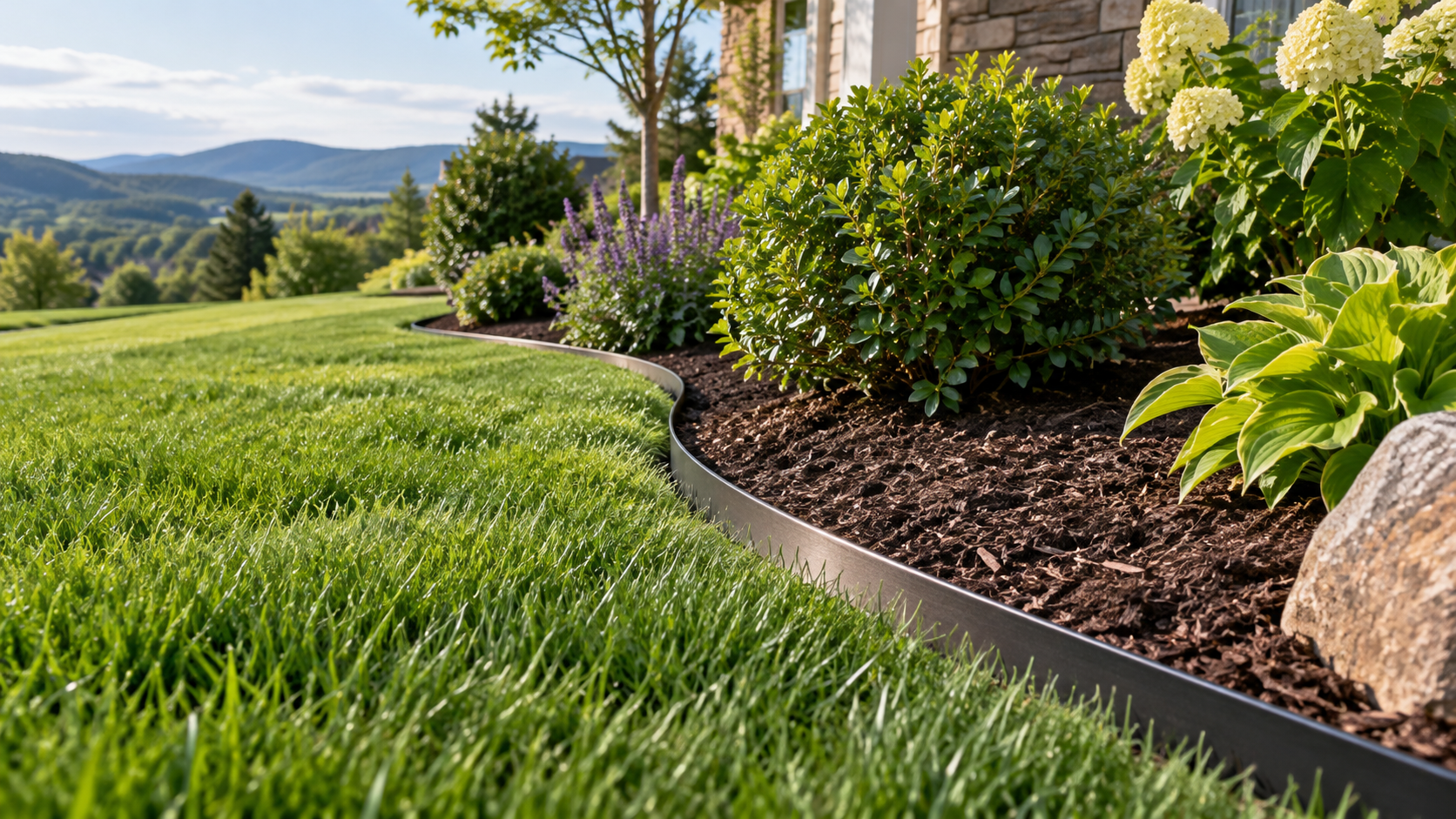
Take two identical flower beds with the same plants and the same mulch. Give one a crisp, clean edge and leave the other with grass creeping in from every side. The first looks professionally maintained. The second looks a little neglected, even though the plants are exactly the same.
That's the power of landscape edging. It's a small detail that defines your beds, keeps mulch and stone where they belong, and makes the whole yard look sharper. Here's a guide to the main types of landscape edging, how they compare, and which work best for Harrisonburg yards.
Why Edging Matters
- Clean lines: Edging gives beds a defined shape that looks intentional.
- Keeps grass out: Tall fescue and other grasses spread into beds without a barrier.
- Holds materials in: Mulch, pea gravel, and stone stay in the bed instead of washing into the lawn.
- Easier mowing: A clear boundary makes it easier to mow and trim along beds.
- Less maintenance: Fewer weeds to pull and less mulch to replace.
Option 1: Natural Spade-Cut Edge
A spade-cut edge is a clean trench cut between the lawn and the bed, usually a few inches deep with a sloped side toward the bed. It's the classic look used on many well-kept properties.
Pros: No materials to buy, natural appearance, easy to change bed shapes.
Cons: Needs to be recut regularly, often in spring and again during the season, since grass roots gradually creep back.
Option 2: Steel or Aluminum Edging
Metal edging is thin, strong, and nearly invisible from a distance. It's staked into the ground and holds a crisp line.
Pros: Very durable, flexible enough for smooth curves, clean modern look, works well with gravel and mulch.
Cons: Higher cost than plastic, and the top edge should be installed carefully at the right height for safety and mowing.
Option 3: Stone Edging
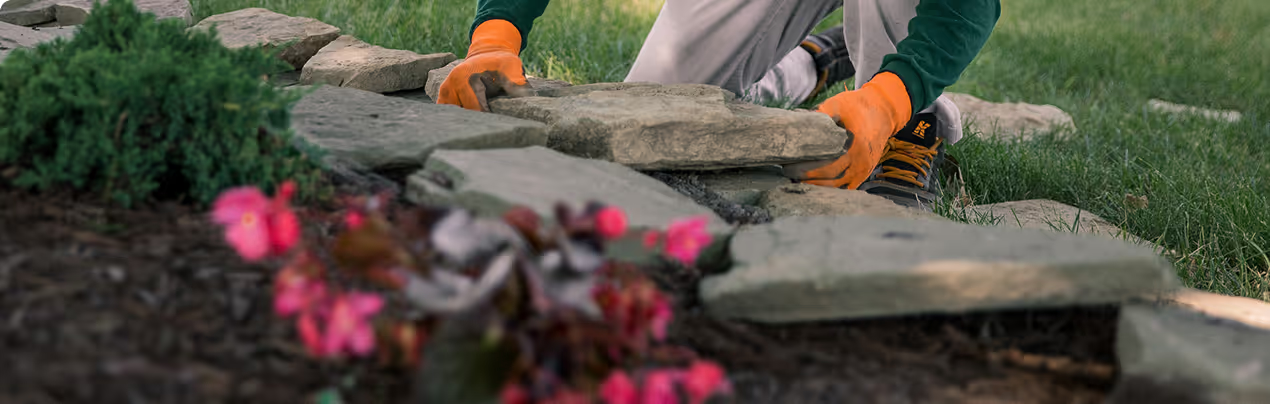
Natural stone, fieldstone, or cut stone creates a substantial, timeless border. Stones can be set in a single row or stacked into a low wall.
Pros: Beautiful, natural look that fits Valley landscapes, very long-lasting, adds texture.
Cons: Grass can grow between stones without a mowing strip, and installation takes more labor.
Option 4: Paver or Brick Edging
Pavers or bricks set flush with the lawn create a "mowing strip," a flat border your mower wheel can ride on, eliminating most string trimming.
Pros: Clean, polished look, reduces trimming time, pairs well with patios and walkways.
Cons: Needs a proper base to stay level through freeze-thaw cycles.
Option 5: Plastic Edging
Plastic edging is widely available and inexpensive.
Pros: Low cost, easy to install.
Cons: Often heaves out of the ground during freeze-thaw cycles, can crack in cold weather, and tends to look cheap as it ages. In the Shenandoah Valley's winters, it's frequently the first edging to fail.
Option 6: Concrete Curbing
Poured concrete curbing is formed in a continuous line around beds.
Pros: Durable, continuous, can be colored or stamped.
Cons: Permanent, so bed shapes are hard to change later, and it can crack over time.
Choosing the Right Edging
- For a classic, natural look: Spade-cut or stone
- For gravel or modern landscapes: Steel or aluminum
- For less trimming: Paver or brick mowing strips
- For rustic or farmhouse properties: Fieldstone
- For a budget-friendly start: A fresh spade-cut edge, upgraded later
Installation Tips for Harrisonburg's Climate
Our freeze-thaw winters and clay soils are hard on edging. To keep it in place:
- Install edging deep enough that frost doesn't push it up
- Use plenty of stakes for metal and plastic edging
- Set pavers and stone on a compacted gravel base
- Make sure water can drain away from beds rather than pooling against edging
- Check edging each spring and reset any sections that heaved over winter
Edging and Mulch Work Together
Edging and mulch are a natural pair. A crisp edge holds two to three inches of fresh mulch in place and keeps it from washing onto the lawn during heavy spring rains. Many homeowners schedule edging and mulching together in spring. Our post on when to apply mulch in Virginia covers the best timing, and our spring landscape cleanup guide explains how edging fits into the season.
Shaping Better Beds
While you're edging, it's a great time to rethink bed shapes. Smooth, flowing curves are easier to mow around than tight corners. Wider beds around trees protect roots and trunks from mower damage. Connecting small, scattered beds into larger planting areas often looks better and is easier to maintain.
Common Questions
How often does a spade-cut edge need recutting?
Usually once or twice a year, often in spring with the mulch refresh and again mid-season. Fast-growing grasses may need more frequent touch-ups.
Is metal edging safe around kids and pets?
Quality steel and aluminum edging has a rolled or rounded top. Installing it at the right height, just above the soil line, reduces any risk.
Can I edge around trees?
Yes. A wide, edged mulch ring around trees protects trunks from mower and trimmer damage and helps roots stay healthy.
Landscape Edging in Harrisonburg
Virginia Landscape Company installs edging, mulch, and stone for homes and businesses in Harrisonburg, Dayton, Penn Laird, Bridgewater, and McGaheysville. Clean edges are one of the details we care about most. Explore our mulch and stone and landscape cleanup services.
Contact us or call 540-208-9603 to sharpen up your beds.

Ready to reimagine your landscape?
Contact Us
We’re ready to bring your landscape vision to life. Reach out and start your outdoor transformation today.


