
Pavers, Natural Stone, or Concrete? Choosing a Patio for Your Harrisonburg Yard
Compare pavers, natural stone, and poured concrete for your patio, and learn why base preparation is the key to hardscape installation that lasts in Harrisonburg.

Picture your backyard on a warm September evening. Friends around a table. Something on the grill. Kids running across the grass. Now picture where everyone is standing. If the answer is "on a muddy patch next to the back steps," it may be time to think about hardscaping.
A patio is one of the most popular hardscape projects in Harrisonburg, and for good reason. It turns unused lawn into a real outdoor room. But the material you choose affects how it looks, how long it lasts, and how much upkeep it needs. Here's how pavers, natural stone, and concrete compare, and what makes a hardscape installation last in the Shenandoah Valley.
Option 1: Concrete Pavers
Pavers are manufactured concrete units that come in a wide range of shapes, sizes, colors, and textures. They're set over a compacted base and locked together with joint sand.
Why people choose them:
- Huge variety of styles, from classic brick looks to modern large-format slabs
- Individual pavers can be lifted and replaced if one is damaged or if utility work is needed
- Joints allow slight movement, which helps them handle freeze-thaw cycles
- Consistent sizes make patterns like herringbone or basket weave possible
Things to know: Joints need periodic re-sanding, and weeds can sprout in joints if they aren't filled with polymeric sand or maintained.
Option 2: Natural Stone
Natural stone patios use flagstone, bluestone, or other quarried stone. Each piece is unique, which gives the patio an organic, timeless look.
Why people choose it:
- Beautiful natural color and texture
- Pairs well with gardens, older homes, and rural settings
- Extremely durable when installed on a proper base
- Can be cut into a regular pattern or laid in an irregular, natural layout
Things to know: Natural stone usually costs more, takes more time to install, and surfaces can be less uniform underfoot. It can also be slippery when wet if it has a smooth finish.
Option 3: Poured Concrete
Poured concrete patios are formed and finished in place. They can be left plain, brushed for texture, or stamped and colored to mimic stone.
Why people choose it:
- Often the most budget-friendly option for a large area
- Smooth, continuous surface that's easy to sweep
- Stamped finishes can imitate more expensive materials
Things to know: Concrete can crack as soil moves and temperatures swing, and cracks are harder to repair invisibly. Stamped and colored concrete needs resealing over time to keep its look.
Why the Base Is Everything
No matter which surface you choose, a patio is only as good as what's underneath it. Most patio failures, like sinking, heaving, and uneven spots, come from a poorly prepared base. A proper installation includes:
- Excavation to the right depth, removing topsoil and organic material
- Compacted gravel base laid and compacted in layers
- Proper slope so water drains away from the house, typically a gentle fall across the patio
- A leveling layer of sand or fine aggregate for pavers and stone
- Edge restraint to keep pavers from shifting outward
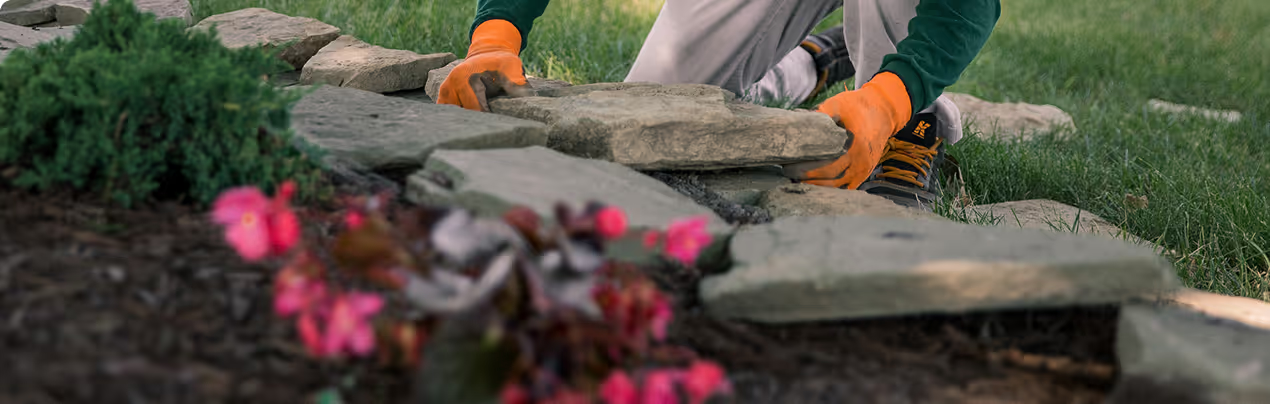
Our post on stone pathway installation explains base preparation in more detail.
Built for Valley Weather
Harrisonburg's climate is tough on hardscapes. Winter brings repeated freeze-thaw cycles, when water in the soil freezes, expands, and thaws again. Spring brings heavy rain, and much of the area has clay soil that drains slowly. Hardscapes built here need:
- A deep enough, well-compacted base to resist frost movement
- Good drainage so water doesn't sit under the patio
- Materials rated for freeze-thaw exposure
- Careful grading around the patio so runoff doesn't wash out the edges
Design Ideas for Harrisonburg Patios
- Connect to the house: A patio right off the kitchen or living room gets used the most.
- Plan the size around furniture: A dining table for six needs more room than most people expect, including space to pull out chairs.
- Add a fire pit: Extends the season into cool fall evenings.
- Include seating walls: Low walls add structure and extra seating.
- Soften the edges: Planting beds around the patio make it feel part of the landscape.
- Light it up: Low-voltage lighting adds safety and ambiance. See our ideas for landscape lighting.
Caring for Your Hardscape
- Sweep regularly and rinse occasionally
- Top up joint sand on paver patios as needed
- Pull weeds early before roots take hold
- Avoid harsh de-icing salts, which can damage some surfaces
- Reseal stamped concrete and some stone on the schedule recommended for the material
Common Questions
How big should my patio be?
Plan around how you'll use it. A small bistro set fits in a modest space, but a dining table for six plus a grill and lounge chairs needs far more room. Sketching furniture to scale before you build helps avoid a patio that feels cramped.
Do pavers sink over time?
Pavers installed over a properly compacted base rarely sink. Settling usually means the base was too thin, poorly compacted, or affected by drainage problems.
When is the best time to build a patio?
Spring through fall works well in Harrisonburg. Building in fall means your patio is ready to enjoy the following spring.
Hardscape Installation in Harrisonburg
Virginia Landscape Company designs and installs patios, walkways, and other hardscape features for homes and businesses in Harrisonburg, Dayton, Penn Laird, Bridgewater, and McGaheysville. Explore our hardscape services and see recent work in our gallery.
Contact us or call 540-208-9603 to start planning your patio.

Ready to reimagine your landscape?
Contact Us
We’re ready to bring your landscape vision to life. Reach out and start your outdoor transformation today.


