
The Custom Landscape Design Process: From Site Visit to Final Planting
What happens during custom landscape design? Follow each step from site visit and goals to plant selection, hardscape, and installation for your Harrisonburg property.
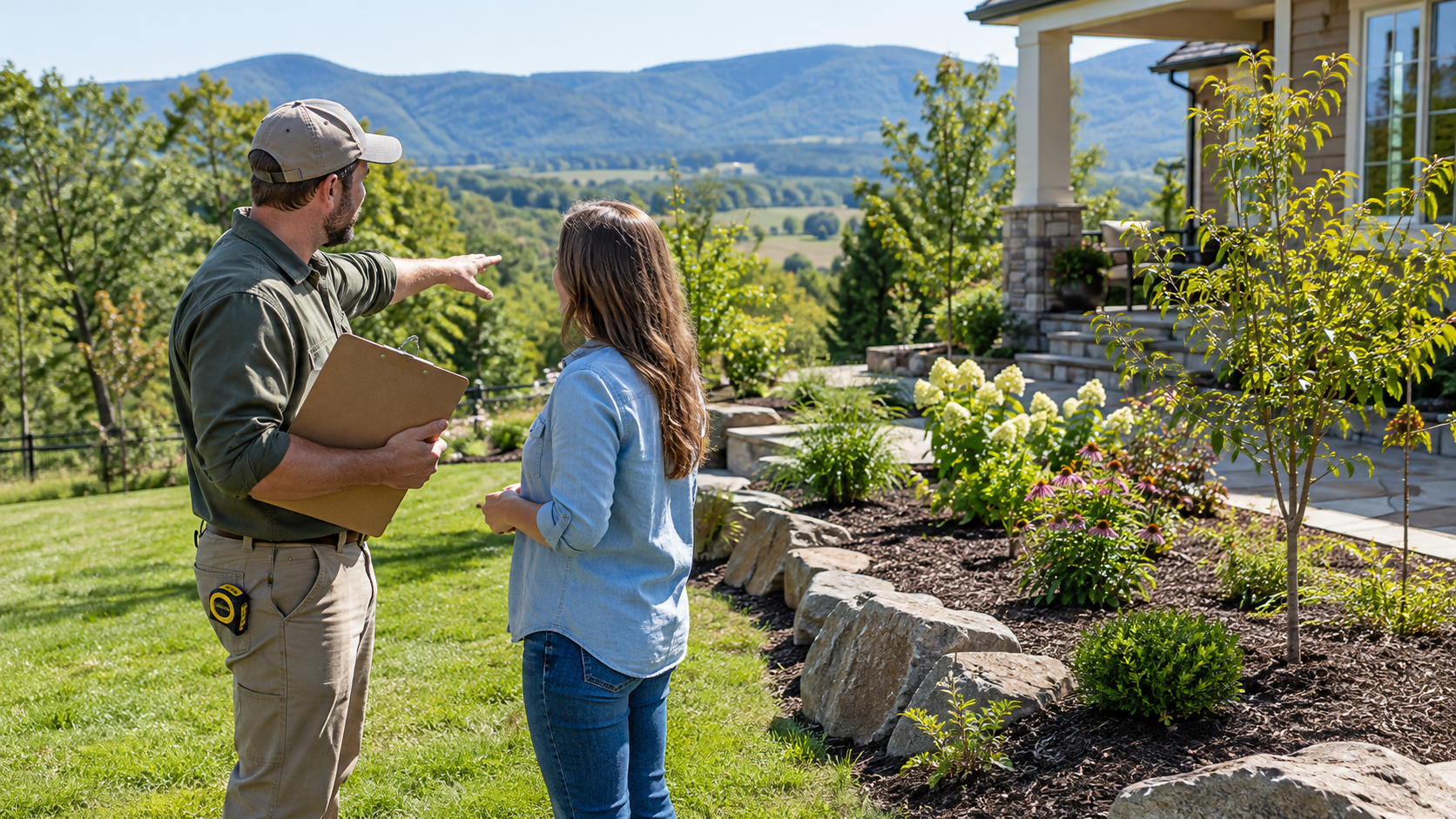
Most landscapes aren't designed. They accumulate. A shrub from the big box store one spring. A bed added after a weekend project. A tree planted in memory of someone. A path worn into the grass where everyone walks. Ten years later, the yard has pieces but no plan.
A custom landscape design brings it all together. Instead of adding one thing at a time, you start with a clear picture of how the whole property should look and work. Here's what the custom landscape design process looks like for Harrisonburg homeowners, from the first site visit to the final planting.
Why Custom Design Matters
Every property is different. Sun and shade, slopes, soil, drainage, views, and how your family uses the yard all shape what will work. A custom design accounts for all of that so you end up with:
- Plants that thrive in their location instead of struggling
- Spaces that fit how you actually live outdoors
- A cohesive look that ties the house and yard together
- A plan you can install all at once or in phases
- Fewer costly mistakes and replacements later
Step 1: The Site Visit
Every good design starts with walking the property. During the first visit, a designer looks at:
- Sun patterns throughout the day
- Slopes, low spots, and drainage problems
- Existing trees, shrubs, and features worth keeping
- Views to highlight and views to screen
- Soil conditions
- Utilities, septic fields, and other constraints
- How people currently move around the yard
This is also the time to talk about what you love, what frustrates you, and what you'd like to change.
Step 2: Defining Your Goals
A designer will ask questions like:
- How do you want to use the space: entertaining, gardening, play, relaxation?
- Do you want low-maintenance plantings or are you an avid gardener?
- Are deer a problem?
- Do you need privacy from neighbors or the road?
- Do you want a patio, walkway, fire pit, or lighting?
- What's your budget, and would you prefer to phase the project?
Clear answers make the design more useful and realistic.
Step 3: The Concept
Next comes a concept plan that lays out the big picture: where beds, lawn, patios, paths, and focal points will go. This is where flow is worked out, so the front walk feels welcoming, the patio connects to the house, and the yard feels balanced from every angle.
Step 4: Plant Selection
Choosing plants is where a design comes to life. A good plant plan considers:
- Right plant, right place: Matching plants to sun, shade, and soil
- Four-season interest: Spring blooms, summer color, fall foliage, and winter structure from evergreens and bark
- Mature size: Spacing plants for how big they'll get, not how big they are at planting
- Deer pressure: Using deer-resistant plants where needed
- Native plants: Supporting pollinators and wildlife while reducing maintenance
For ideas, see our posts on native plants that thrive in Rockingham County and deer-resistant plants.
Step 5: Hardscape and Lighting
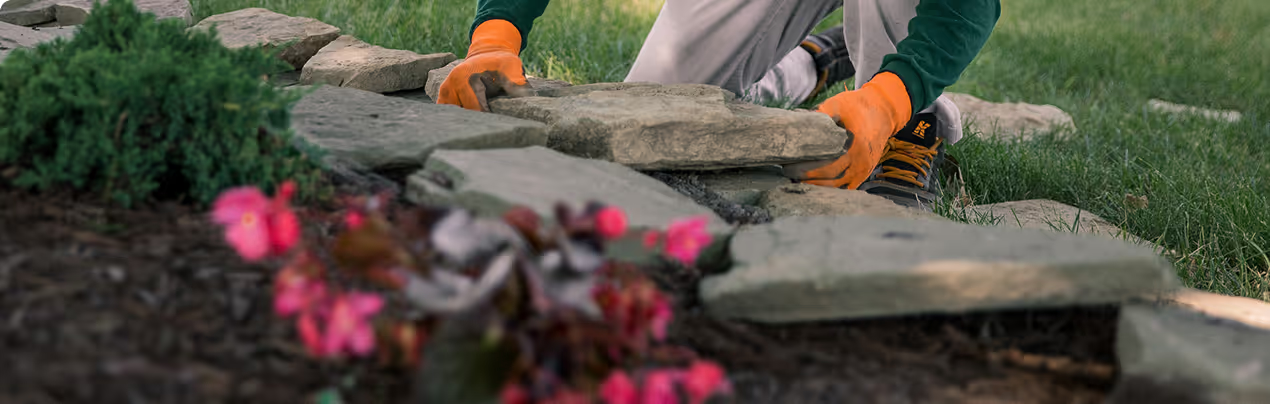
Hardscape elements like patios, walkways, retaining walls, and stone borders give a landscape its structure. Lighting extends its use into the evening and adds safety. These features are planned alongside plantings so everything fits together.
Step 6: Installation
Once the design is final, installation typically follows a logical order:
- Site preparation, grading, and drainage improvements
- Hardscape construction
- Soil preparation in planting areas
- Planting trees, then shrubs, then perennials and ground covers
- Mulch and finishing touches
- Lawn repair or seeding where needed
When to Plant in Harrisonburg
Fall is one of the best times to plant trees and shrubs in the Shenandoah Valley. Cooler air and warm soil let roots grow before winter, giving plants a head start in spring. Spring planting works well too, especially for perennials, as long as new plants are watered through their first summer.
Phasing Your Project
A custom design doesn't have to be installed all at once. Many Harrisonburg homeowners start with the most important area, often the front entry or a backyard patio, and add other phases over the next few years. Because everything follows one plan, each phase fits seamlessly with the last.
Caring for a New Landscape
New plantings need consistent watering for their first growing season while roots establish. Mulch helps hold moisture and suppress weeds. Our guide on when to apply mulch in Virginia explains the timing. Ongoing maintenance, like pruning, weeding, and seasonal cleanups, keeps the design looking the way it was intended.
Common Questions
How long does the design process take?
It depends on the size of the property and the complexity of the plan. Smaller projects can move from site visit to installation fairly quickly, while larger designs with hardscape and lighting take more planning.
Can you work with plants I already have?
Absolutely. Healthy, well-placed trees and shrubs are valuable, and a good design keeps and highlights them. Plants in the wrong spot can sometimes be moved instead of replaced.
Will a custom design increase maintenance?
Not if it's designed with your goals in mind. A low-maintenance design uses the right plants for the site, plenty of mulch, and fewer high-care features.
Custom Landscape Design in Harrisonburg
Virginia Landscape Company offers custom landscape design and installation, including plant design and pavers, for homes and businesses in Harrisonburg, Dayton, Penn Laird, Bridgewater, and McGaheysville. Owner Tim Meredith started the company to pursue a passion for fine landscapes, and that attention to detail goes into every project.
Contact us or call 540-208-9603 to schedule a design consultation.

Ready to reimagine your landscape?
Contact Us
We’re ready to bring your landscape vision to life. Reach out and start your outdoor transformation today.


